
When an interviewer asks if you have questions, most candidates ask the ones that sound sensible but say nothing.
The forgettable ones
- ✗"What does a typical day look like?"
- ✗"What are the opportunities for progression?"
- ✗"Is there anything you'd like me to clarify?"
- ✗"What are the company's plans for the future?"
These aren't wrong — they're just forgettable. They don't signal curiosity, preparation, or ambition. They signal that you ran out of things to say.
The questions you ask at the end of an interview are part of the interview. They tell the interviewer how you think, what you care about, and whether you've actually prepared. A well-chosen question can do more work in thirty seconds than twenty minutes of polished answers.
Here are ten questions that actually impress — and why each one works.
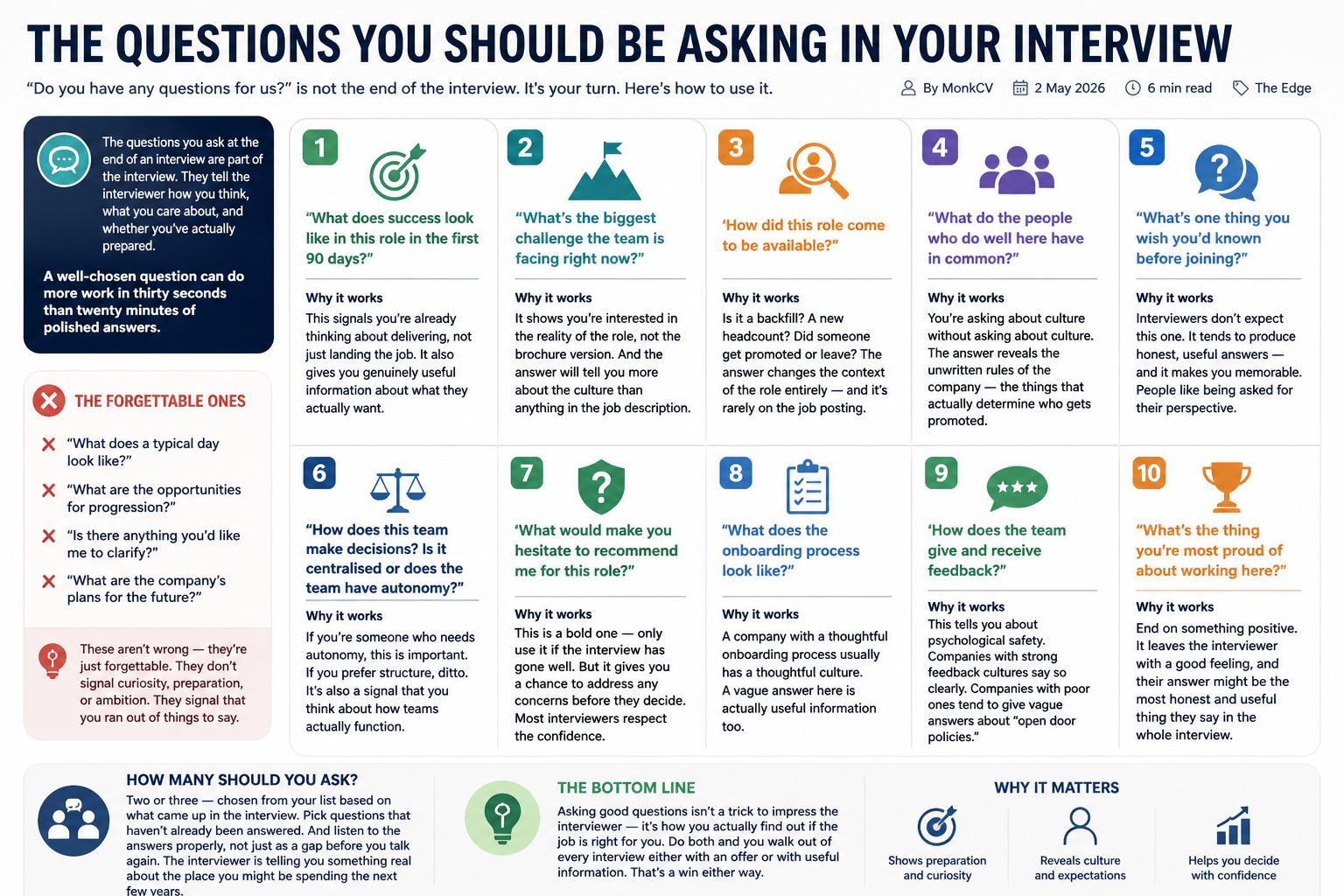
Save or share this — full breakdown below.
1“What does success look like in this role in the first 90 days?”
Why it works
This signals you're already thinking about delivering, not just landing the job. It also gives you genuinely useful information about what they actually want.
2“What's the biggest challenge the team is facing right now?”
Why it works
It shows you're interested in the reality of the role, not the brochure version. And the answer will tell you more about the culture than anything in the job description.
3“How did this role come to be available?”
Why it works
Is it a backfill? A new headcount? Did someone get promoted or leave? The answer changes the context of the role entirely — and it's rarely on the job posting.
4“What do the people who do well here have in common?”
Why it works
You're asking about culture without asking about culture. The answer reveals the unwritten rules of the company — the things that actually determine who gets promoted.
5“What's one thing you wish you'd known before joining?”
Why it works
Interviewers don't expect this one. It tends to produce honest, useful answers — and it makes you memorable. People like being asked for their perspective.
6“How does this team make decisions? Is it centralised or does the team have autonomy?”
Why it works
If you're someone who needs autonomy, this is important. If you prefer structure, ditto. It's also a signal that you think about how teams actually function.
7“What would make you hesitate to recommend me for this role?”
Why it works
This is a bold one — only use it if the interview has gone well. But it gives you a chance to address any concerns before they decide. Most interviewers respect the confidence.
8“What does the onboarding process look like?”
Why it works
A company with a thoughtful onboarding process usually has a thoughtful culture. A vague answer here is actually useful information too.
9“How does the team give and receive feedback?”
Why it works
This tells you about psychological safety. Companies with strong feedback cultures say so clearly. Companies with poor ones tend to give vague answers about "open door policies."
10“What's the thing you're most proud of about working here?”
Why it works
End on something positive. It leaves the interviewer with a good feeling, and their answer might be the most honest and useful thing they say in the whole interview.
How many should you ask?
Two or three — chosen from your list based on what came up in the interview. Pick questions that haven't already been answered. And listen to the answers properly, not just as a gap before you talk again. The interviewer is telling you something real about the place you might be spending the next few years.
The bottom line
Asking good questions isn't a trick to impress the interviewer — it's how you actually find out if the job is right for you. Do both and you walk out of every interview either with an offer or with useful information. That's a win either way.
Get 10 questions tailored to your role
MonkCV's Ask the Interviewer tool generates questions specific to the job and company — based on the actual job description. Takes under 60 seconds.
Generate my questions — free →Paresh Patel
LinkedIn →Founder, MonkCV — free career tools for job seekers
Every article is researched and written using primary sources — WEF reports, ONS data, Goldman Sachs research and real hiring data. MonkCV is free because good career advice shouldn't cost £200/month. How MonkCV works →