
6–7 sec
Average time a recruiter spends on a first CV scan
Ladders Inc. Eye Tracking Study
2 pages
Optimal CV length for most professionals
ResumeGo Research
76%
of recruiters reject CVs that are too long
TopResume Survey
Yes, length matters. But not in the way most people think.
The question of how long a CV should be generates more conflicting advice than almost any other topic in job seeking. One person tells you one page is the rule. Another says two pages is standard. A career coaching article says three pages is fine for senior roles. You end up with a four page document and no idea what to cut.
Here is what recruiters actually want, and why.
The quick answer
What Recruiters Actually Do When They Look at a CV
Before you agonise over CV length, understand what a recruiter actually does when they receive your application.
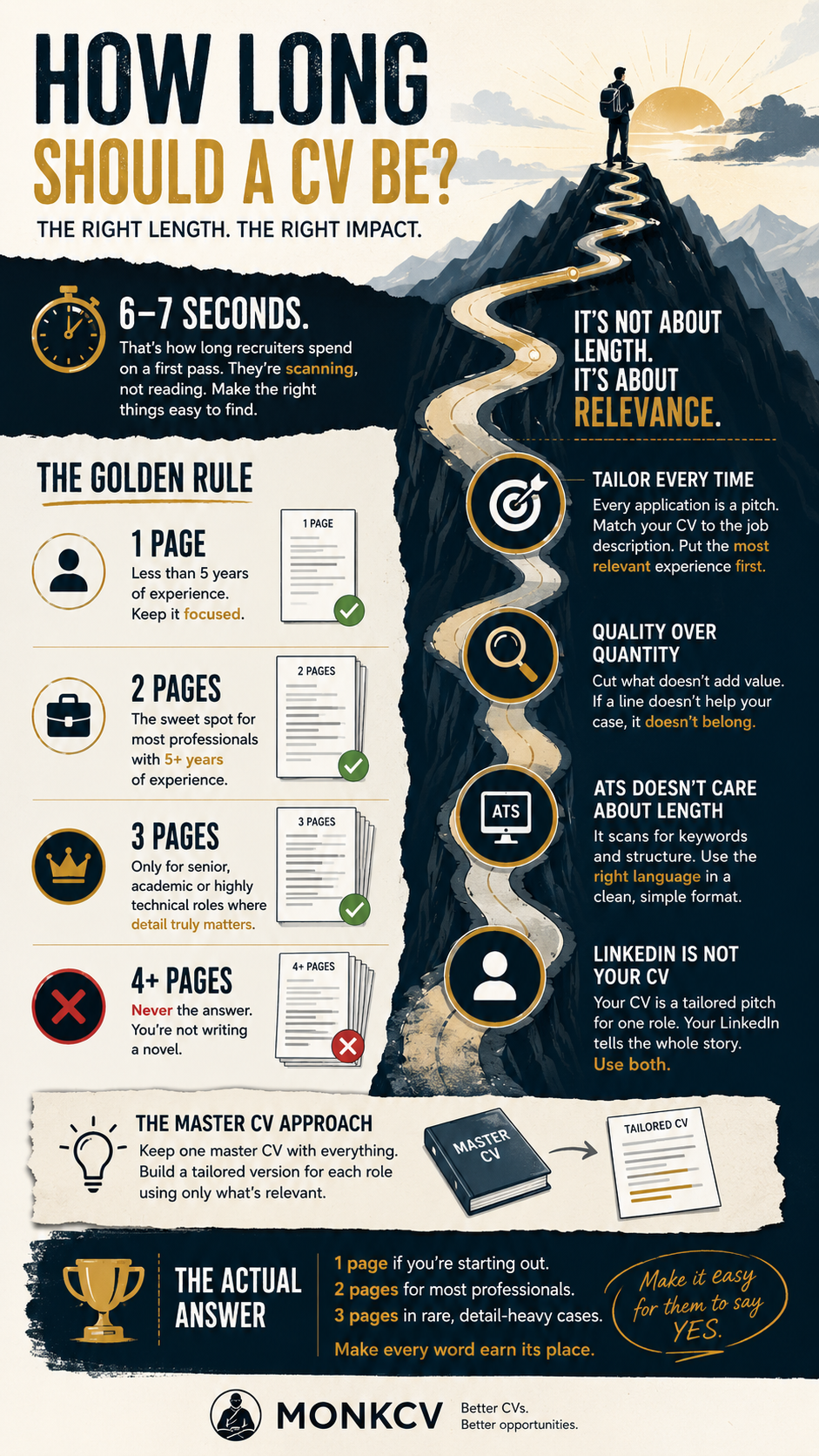
Research consistently shows that a recruiter will spend an average of six to seven seconds on an initial scan of a CV. They are not reading it. They are looking for signals. Job title matches, company names, relevant keywords, and career history at a glance.
If your CV passes that scan, they read it properly. If it does not, CV length becomes irrelevant because they have already moved on. The question is not how many pages you need. It is whether every line earns its place on the page.
One page CV works when
- ✓You are a graduate or have less than 5 years of experience
- ✓You are changing careers and most of your past is not relevant
- ✓The role specifically asks for a one page resume
Two page CV works when
- ✓You have more than 5 years of relevant experience
- ✓Your career history genuinely needs the space to tell its story
- ✓You are applying to roles that use ATS screening
A one page CV starts working against you when you are mid career or senior and trying to condense 15 years of relevant experience, skills sections, and achievements into a space that does not do them justice. Recruiters can tell when a CV has been shortened to fit a page. Tiny fonts, narrow margins, and dense blocks of text all signal the same thing: this person followed a rule rather than considering readability.
Does a Recruiter Actually Read Page Two?
Only if page one was worth their time.
Most people rewrite their CV three times trying to get it to two pages and never once ask whether the best bits are actually at the top. They are not. The oldest job usually is.
Flip it. Your most relevant experience for this role goes first. The stuff that makes a recruiter think yes, this person gets it. If you can do that, they will turn the page. If you cannot, the length of your CV does not matter.
Every application you send is a pitch for one specific job. Treat it like one. Read the job description properly, pick out the language they use, and make sure your CV reflects it back. The experience that matters most for this role goes at the top. Everything else supports it.
Sending the same CV everywhere is the fastest way to get ignored everywhere.
When Three Pages Is Acceptable
Senior leadership roles with 20 or more years behind them. Academic positions that require publications and presentations. Highly technical roles in engineering, medicine, or law where leaving out specific qualifications is not an option.
Even then, length is not an excuse to include everything you have ever done. If you are going for a senior role and your CV is three pages of jobs that stopped being relevant a decade ago, that is not impressive. It is just more work for the recruiter and more reasons for them to lose interest before they find the good stuff.
The Master CV Approach
Master CV
Contains everything. Every role, achievement, skill, and qualification. You never send this to anyone. It is your source document.
Tailored CV
Built from the master for each application. Only what is relevant to this specific role. Matches the language of the job description. The version you actually send.
When you only include information relevant to the job, your CV finds its own correct length.
CV Length and the Applicant Tracking System
ATS software does not care how many pages your CV is. It is scanning for keywords from the job description, parsing your career history, your skills section, your qualifications. Length does not give you an advantage.
What does give you an advantage is a clean format and the right language. A two page CV that mirrors the job description and is easy to parse will beat a one page CV that has been squashed into illegibility. It will also beat a four page CV where the relevant parts are buried so deep the system has moved on before it finds them.
How to Shorten a CV Without Losing Impact
Nobody wants to cut things from their CV. It feels like you are erasing part of your career. So the 2009 job stays in. The four line description of a role you left eight years ago stays in. “Excellent communicator” stays in because, well, it has always been there.
And the CV gets longer and less effective with every version.
A recruiter does not care about a job you did 15 years ago unless it is directly relevant to the role you are applying for now. If it is not, one line with the job title, employer, and dates is enough. Move on.
Go through every bullet point and ask one question: does this make the recruiter more likely to hire me for this specific job? If the answer is no, cut it. Not edit it. Cut it.
And please, remove “excellent communication skills.” Every CV has it. It means nothing because it proves nothing. If you communicate well, show it through an achievement. If you cannot think of one, leave the space blank and fill it with something real.
Your LinkedIn Profile Is Not Your CV
Different rules apply on LinkedIn. There is no page limit and completeness works in your favour. A full work history, a detailed skills section, recommendations from people you have actually worked with. All of it helps you show up in search and gives recruiters something to look at beyond your CV.
Do not treat them the same way. Your CV is a tailored document built for one specific job. Your LinkedIn profile is the longer version that tells the whole story. Keep both, use both, and do not let one limit the other.
Save or share this.
The actual answer
For a graduate or someone with less than five years of experience: one page.
Most professionals with a real career behind them: two pages.
Senior, academic, or technical roles where the detail genuinely matters: three pages, but only if you actually need them.
For everyone, at every level: if a line does not help your case, it is not helping you. Recruiters are not counting pages. They are looking for reasons to call you. Make it easy for them.
Get your CV working harder
Paste your CV and the job description. MonkCV rewrites it to beat ATS, highlights keyword gaps, and tells you exactly what changed and why. Free, no sign-up.
Optimise my CV free →Frequently Asked Questions
Is a two page CV too long?▼
No. For most professionals with more than five years of experience, two pages is the expected and correct length. A two page CV gives you enough space to present your career history, relevant experience, and key achievements clearly without cutting content that matters.
Should a graduate CV be one page?▼
Yes. You do not have ten years of experience to fill two pages with, and trying to stretch it will show. One page, your education, any work you have done including placements and part time jobs, and the skills that are actually relevant to the role. Keep it tight and make every line count.
Do hiring managers actually read the whole CV?▼
Not always, but they will if your CV earns it. The first scan takes around six to seven seconds. If your most relevant experience is visible early and your strongest points are clear, a recruiter will read on. If page one does not make a strong enough case, page two will not get read regardless of what is on it.
Does CV length affect ATS screening?▼
Not directly. ATS systems are looking for keywords and structured information, not counting your pages. What matters is a clean format and language that matches the job description. A bloated or oddly formatted CV can cause parsing errors that knock you out before anyone has read a word.
Is a one page resume better than two pages?▼
Depends entirely on where you are in your career. One page for graduates and early career professionals. Two pages for anyone with a meaningful work history. Either way the rule is the same: every line should be relevant to the job you are applying for.
When is a three page CV acceptable?▼
Senior leadership roles with 20 or more years of experience, academic positions that require publications and presentations, and highly technical roles where specific qualifications must be fully documented. Outside those situations, two pages is your limit.
Should I have a different CV for every job?▼
Yes. Keep a master CV with your full career history and build a tailored version for each application. Take the most relevant experience and skills, match the language to the job description, and cut anything that does not directly support your case for that specific role. It takes longer but it works.
Paresh Patel
LinkedIn →Founder, MonkCV — free career tools for job seekers
Every article is researched and written using primary sources — WEF reports, ONS data, Goldman Sachs research and real hiring data. MonkCV is free because good career advice shouldn't cost £200/month. How MonkCV works →
Read next
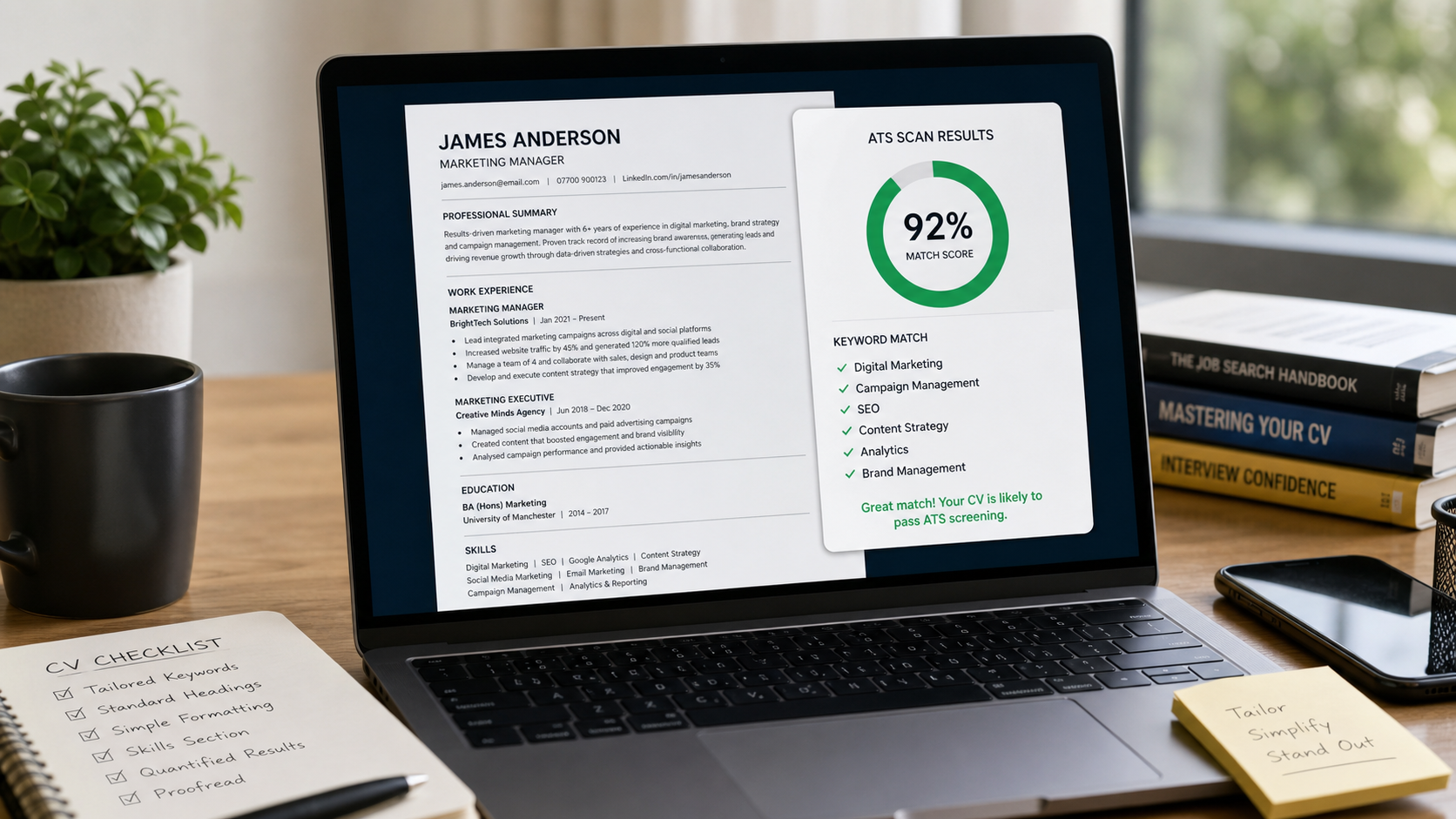
What ATS Actually Looks For — And How to Beat It
Three in four CVs are rejected by a machine before any human reads them. Here's how to fix yours.
6 min read
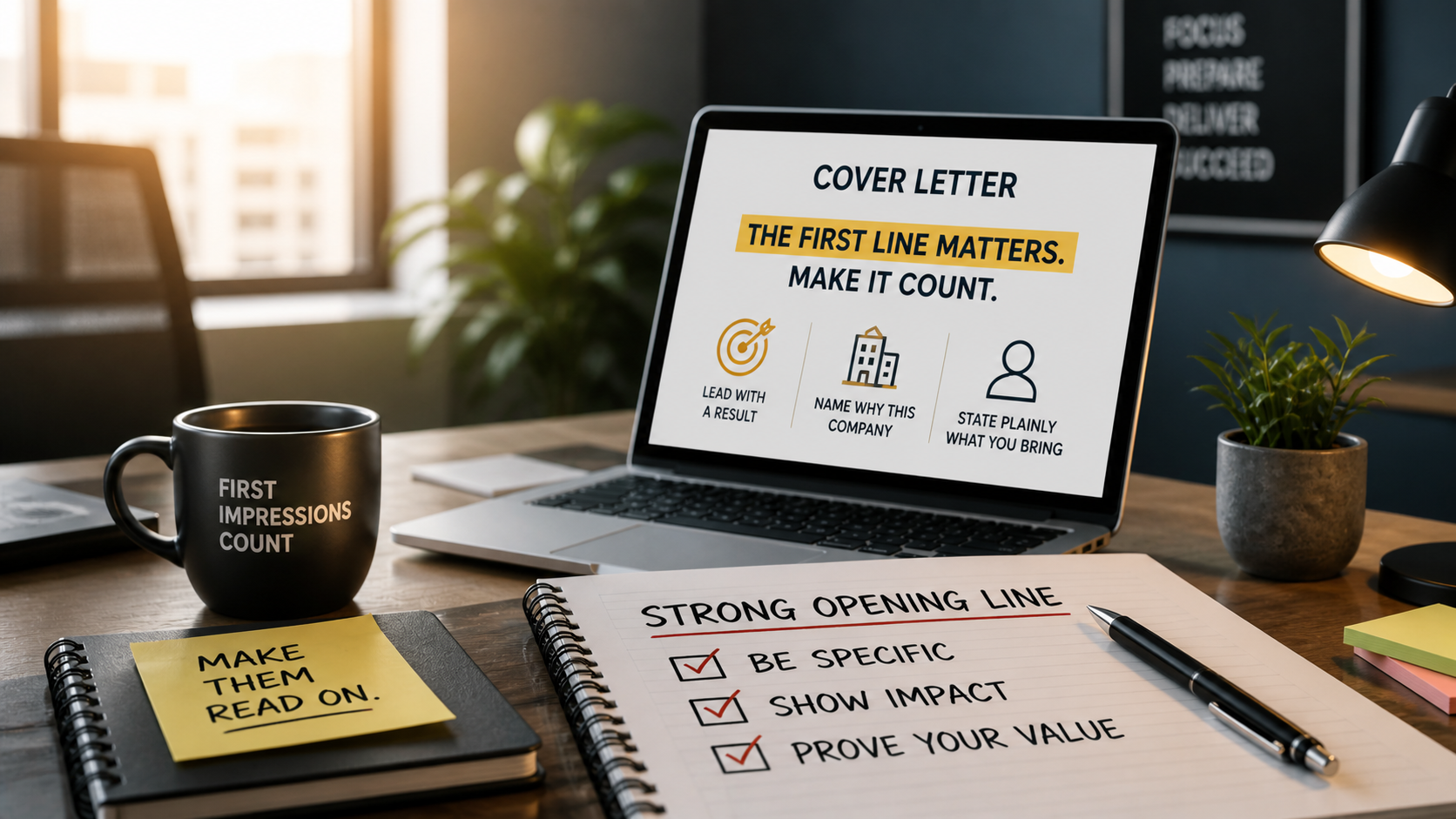
The Cover Letter Opening Line That Gets Recruiters to Read On
A recruiter spends 7 seconds on a cover letter. Most people waste 6 of them.
5 min read

Interview Nerves: How to Stay Calm, Confident and Ready
Interview nerves are normal. Letting them run the room is not. Here's how to regulate your nervous system and perform at your best.
7 min read